
Rail industry experts hail the Metro’s original train fleet’s years of service
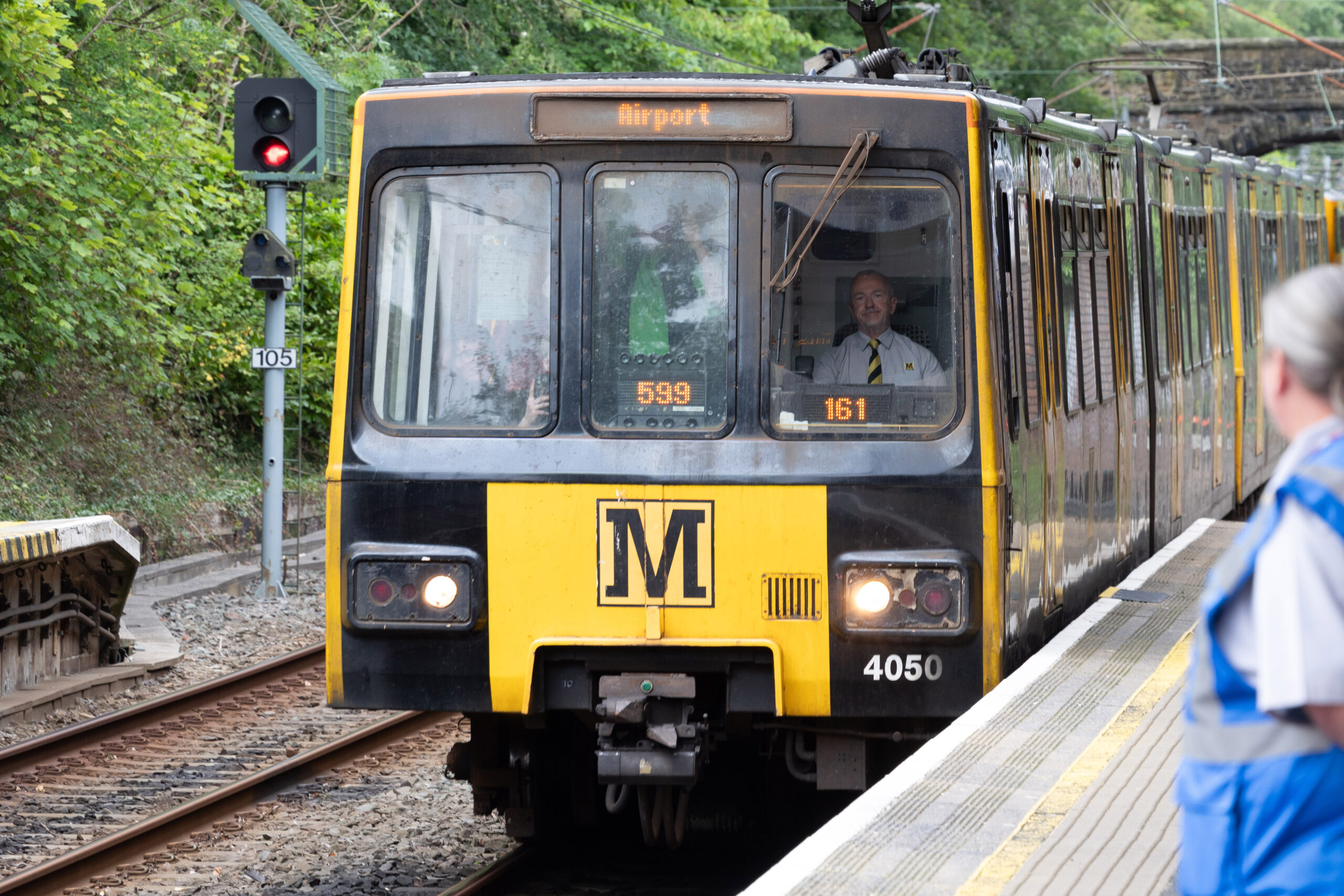
They have praised the fleet’s longevity in what is the final week that customers are guaranteed the chance to travel on it.
The old trains are close to being phased out completely, after being part of everyday life for over 46 years. It marks the end of an era for Metro and for North East England’s railway heritage.
Metro’s original Class 599 trains have carried 1.7 billion customer journeys since entering service in August 1980 and have clocked up half a billion kilometres.
The award-winning writer and broadcaster Christian Wolmar specialises in transport and is the author of a series of books on railway history.
He said: “The North East has been blessed as one of the few regions in the UK outside of London to have a proper light rail system.
“The Tyne and Wear Metro has served the region successfully for many years now.
“For its original train fleet to last for 46 years is a tribute to British engineering and to the teams at the depot who have looked after that fleet.
“The North East was the birthplace of the world’s railways and it’s fabulous to see that the Metro has got its new trains in service. It’s reflective of 200 successful years of rail transport in the region. That’s something to be celebrated as Nexus says farewell to its old trains.”
Rob Pritchard, Editor of Today’s Railways magazine, said: “The Tyne and Wear Metro was the UK’s first modern light rail system when it opened in 1980. Since then the same rolling stock has been plying the system, reliably transporting commuters, airport-goers, day-trippers or those visiting friends or relatives or going for a night out. Now, as they are being retired, the old Metro cars are some of the oldest rolling stock operating in the country.
“I’ve been a regular visitor to Newcastle and have often travelled on Metro, enjoying the colourful liveries carried over the years and in particular the view from the front seat, almost next to the driver – an almost unique experience. But over the last year and a half new Stadler trains have brought modern rolling stock to Metro and introduced the sort of facilities passengers expect from new trains. As we embark on a new era, some will miss the old Metro carriages – their importance to the region over the last 46 years has been immeasurable.”
Danny Longhorn, Editor of Rail Business Daily, said: “Forty-six years is an incredible shift from a fleet that has become synonymous with the area and one which will hold a special place in many hearts. Behind those 1.7 billion journeys will be a wealth of stories and adventures.
“For me personally it is a fleet I have relied on when taking part in the Great North Run. They have become an iconic fleet and one which will live strong in the memories of the many who have used them. But the end of one chapter marks the start of an exciting new one. The new Class 555 fleet has transformed travel, like their counterparts did in 1980, and have already become favourites with commuters. Here’s to a further 1.7 billion journeys.”
Philip Haigh is a contributing writer at RAIL Magazine and a former Metro worker.
He said: “I was a schoolboy in Jesmond when the Metro first opened. Its bright colours were a far cry from the drabness of British Rail’s trains. Gradually over the next few years the hoardings in the centre of town came down as Metro’s network expanded and more children like me tried to grab the front seat and pretend to be the driver.
“More widely, Metro showed what places like Tyneside could do. It paved the way for cities such as Manchester to replicate the success of taking over railway lines and, with investment, rejuvenate them.”
Senior Correspondent for The Railway Magazine Graeme Pickering, who lives in Gateshead, said: “Forty-six years since the ‘Metrocars’ carried their first fare-paying passengers it’s worth remembering that they were seen as cutting edge back then.
“As someone who has lived on Tyneside for the last 20 years I’ve tended to take them for granted, but when I travelled from my then home in Darlington with my parents to make my first Metro journey from Central to Whitley Bay in the early 1980s it felt like stepping into the future.
“The Railway Magazine’s feature on the opening of the Metro system in August 1980 drew attention to the driver being the only member of staff onboard and monitoring the platform via television monitors, as well as the articulated design of the trains. Articulated carriages are a feature of a number of modern fleets including the Stadler trains which are replacing the ‘Metrocars’.”
Bestselling local historian, and author of The Northumbrians, Dan Jackson said: “North East England has always been at the forefront of railway technology: from George and Robert Stephenson’s locomotives, tunnels and bridges to the creation of one of the world’s oldest electrified lines in 1904.
“The Edwardian ‘Tyneside Electrics’ literally laid the foundation for the Tyne and Wear Metro, but so too did the bold period of public investment and urban renewal in the North East that began during “the white heat of technology” era of the 1960s. This carried on in the decades that followed when Tyne and Wear became an important testing ground for new ideas in housing, transport, and regional policy.
“Not all of those developments have stood the test of the time, but the opening of the Metro in 1980 – still the only major urban light rail system outside London – marked a key chapter in that story and helped to transform mobility across Tyneside and Wearside, linking communities, workplaces, schools and cultural venues through a modern rapid-transit network that remains the envy of the world.”
Colin Alexander, of North Tyneside, is an author of books about the Metro and Tyneside’s railways. His father Jack worked for the PTE in the 1970s when the Metro was in development.
He said: “I recall my dad taking me to the Metro test centre at Middle Engine Lane to get a ride on the first two trains. It was an experience never to be forgotten.
“I can remember stepping up to the temporary platform outside the depot and pressing the button which opened the doors with an efficient, pneumatic swish. I had travelled on the London Underground, but our Metro trains were much more modern The acceleration was phenomenal.
“I don’t think anyone could have predicted that these trains would still be moving the population of Tyneside and Wearside more than 45 years after they made their debut. Although it was exciting when the first of their Swiss-built successors made an appearance, I am sad that the old stalwarts, with their unique forward and rearward view, are gone. My dad and his colleagues at the nascent Tyne and Wear PTE can be rightly proud of the fleet they looked after, and it will be missed by many.”
More like this
View all news2 March 2026
Bus shelters set for fresh investment across Tyne and Wear
325 stops to be improved
11 August 2026
Metro modernisation works on Green line to Airport begin this weekend
Essential works on Metro
9 July 2026
Metro’s Green Line set for a programme of renewal work
South Gosforth to Airport route closed for nine days
18 March 2026
One of Metro’s longest serving drivers retires after 40 years
Brian bids Nexus a fond farewell.